
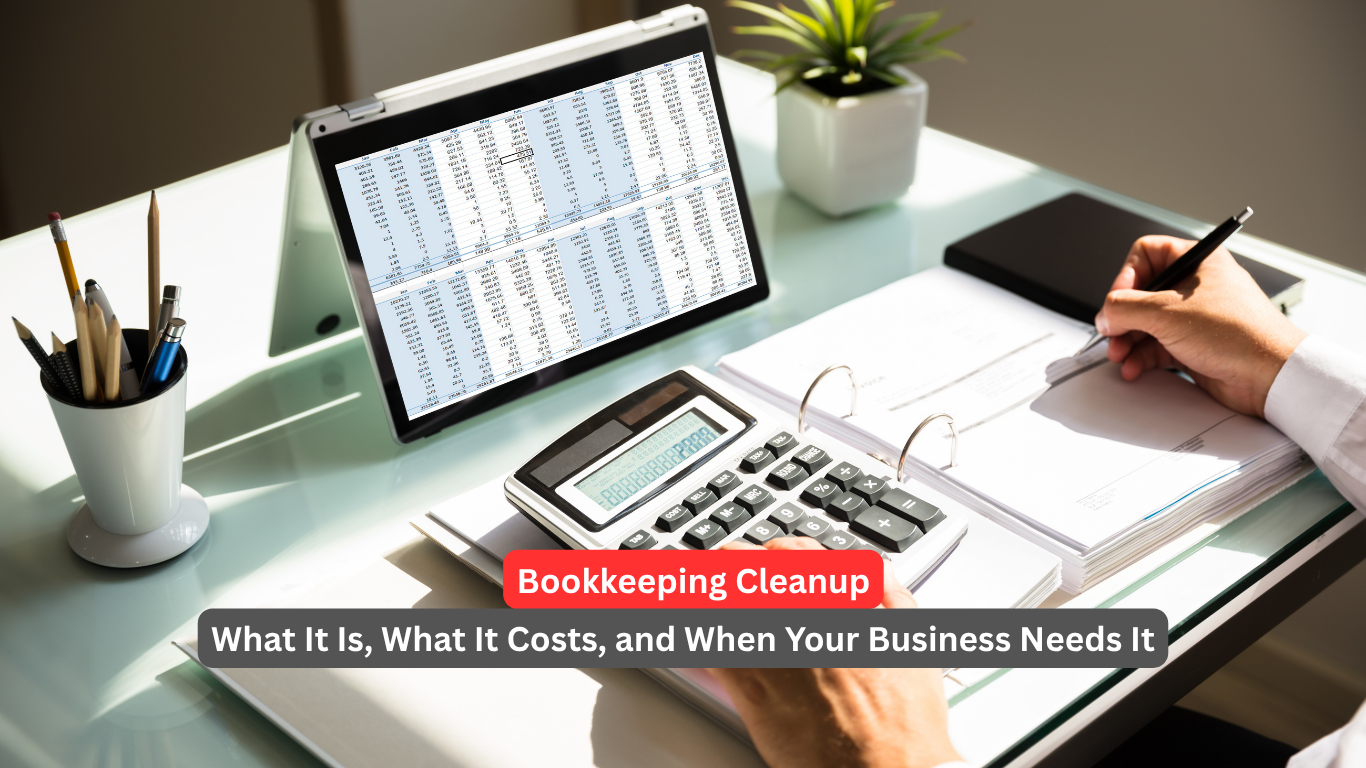
Falling behind on your bookkeeping can happen faster than you expect. A busy month turns into a busy quarter, receipts begin piling up, and transactions stay uncategorized. Before long, you may no longer feel confident that your reports show what is actually happening in your business.
That does not mean your books are beyond repair. A bookkeeping cleanup brings incomplete, outdated, or inaccurate records back into order. It gives you a reliable starting point for monthly bookkeeping, tax preparation, lending applications, and everyday financial decisions.
What is a bookkeeping cleanup?
A bookkeeping cleanup is a detailed review and correction of your financial records. The exact work depends on the condition of your books. In some cases, only a few accounts need to be reconciled. In others, several months of transactions, balances, and reports may need attention.
The goal is not simply to make the numbers look tidy. It is to make sure the information in your accounting software agrees with your bank, credit card, loan, payroll, and payment processor records.
Signs your business may need a cleanup
You may need bookkeeping cleanup services if your bank balance does not match your accounting software, transactions appear more than once, expenses remain uncategorized, or your profit seems unusually high or low. Missing months of bookkeeping, negative account balances that do not make sense, and reports that change every time you open them are also warning signs.
Another common sign is avoiding your financial reports because you do not trust them. When the records are unreliable, it becomes difficult to know what you can spend, what you owe, or how much to prepare for taxes.
What happens during the cleanup?
The process usually begins with a review of your accounting file and supporting documents. Bank and credit card accounts are reconciled, transactions are reviewed and categorized, duplicate entries are removed, and opening balances are checked. The chart of accounts may also be reorganized so income, expenses, assets, and liabilities appear in the correct places.
Your bookkeeper may review accounts receivable, accounts payable, payroll entries, loans, owner contributions, and owner draws. Once the corrections are complete, updated financial statements can be prepared and reviewed for anything that still looks unusual.
How much does bookkeeping cleanup cost?
There is no single price that applies to every business. Cost is normally influenced by how many months are behind, the number of bank and credit card accounts, monthly transaction volume, payroll activity, and the condition of the existing records.
A small business with one account and a few missed reconciliations will generally require less work than a company with multiple payment processors, loans, employees, and a full year of uncategorized transactions. A review of the file is the best way to determine the scope before work begins.
What should you prepare?
Gather bank and credit card statements, loan statements, payroll reports, sales summaries, payment processor reports, and any previous tax returns or financial statements that may help explain the balances. Providing complete records at the start can reduce delays and unnecessary back-and-forth.
Clean books give you a stronger starting point
Once your books are corrected, regular monthly bookkeeping becomes much easier. You can review accurate reports, prepare for taxes, follow cash flow, and make decisions with greater confidence.
Aced Accounting provides bookkeeping cleanup and ongoing monthly bookkeeping for small businesses. If you are unsure about the condition of your records, schedule a free consultation. We can review your current setup, identify the main issues, and explain the next steps clearly.